FutureForge
Overview
A Strategic Design Model for Internal Workforce Transitions in the Fourth Industrial Revolution
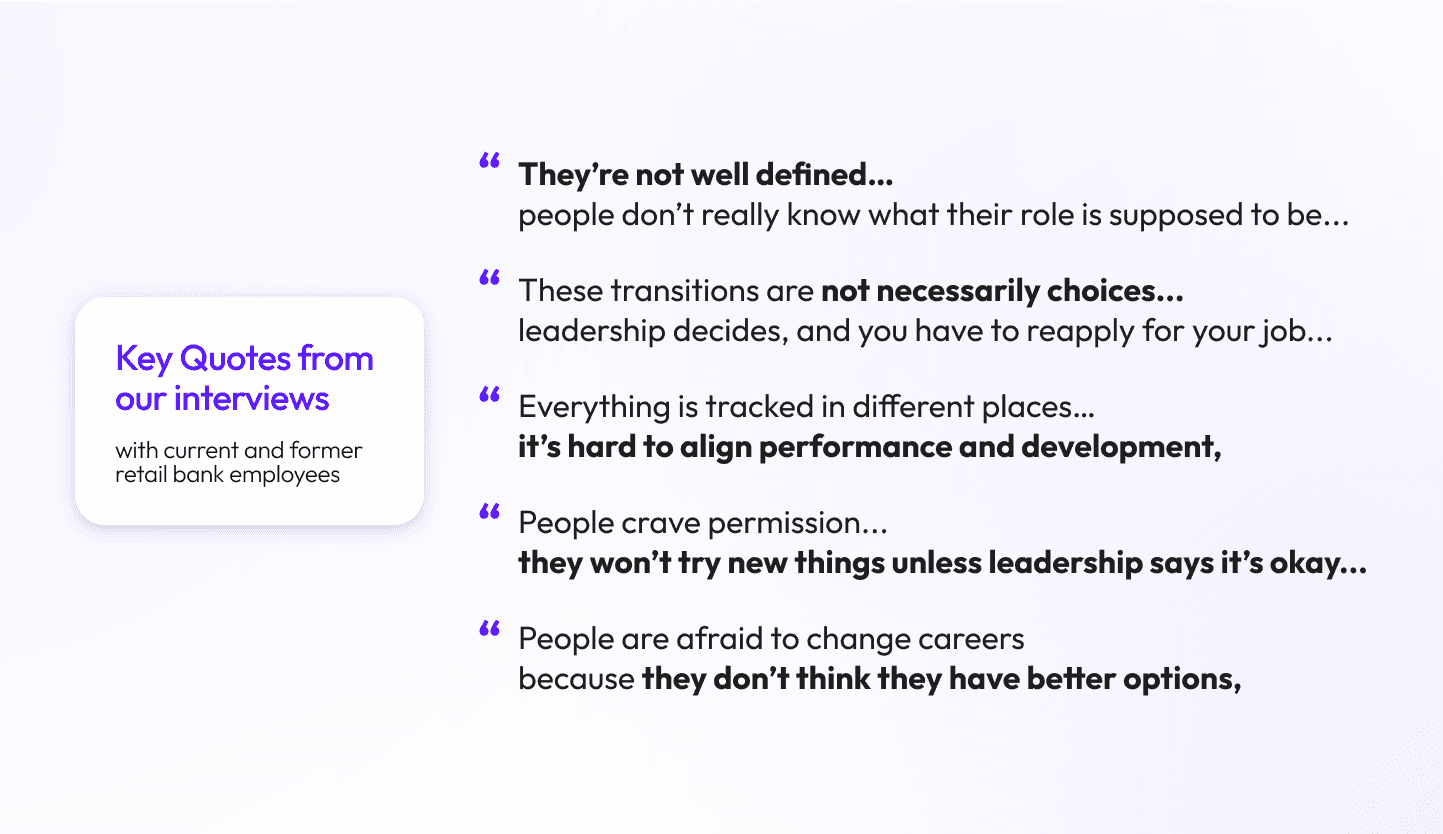
FutureForge is a strategic service model that helps UK retail banks move from reactive redeployment to proactive internal mobility by fixing four systemic failure modes: fragmented infrastructure, permission-led culture, low psychological safety, and ad-hoc workforce strategy.
It reframes workforce transition as a continuous journey (not a one-off event), aligning employee agency with strategic workforce planning through an integrated experience architecture, behavioural scaffolding, and governance touchpoints across HR, L&D, SWP, and line management.
Categories
Service Design
Design Strategy
Date
Jul 28, 2025
Client
Royal College of Art
(Content under Construction, Click here to view full report)
Jump to:
Research and Discovery
Developing a new strategic model
Validation and Co-design
Context:
UK retail banking, mid-career workforce transitions under AI/automation disruption
Methods:
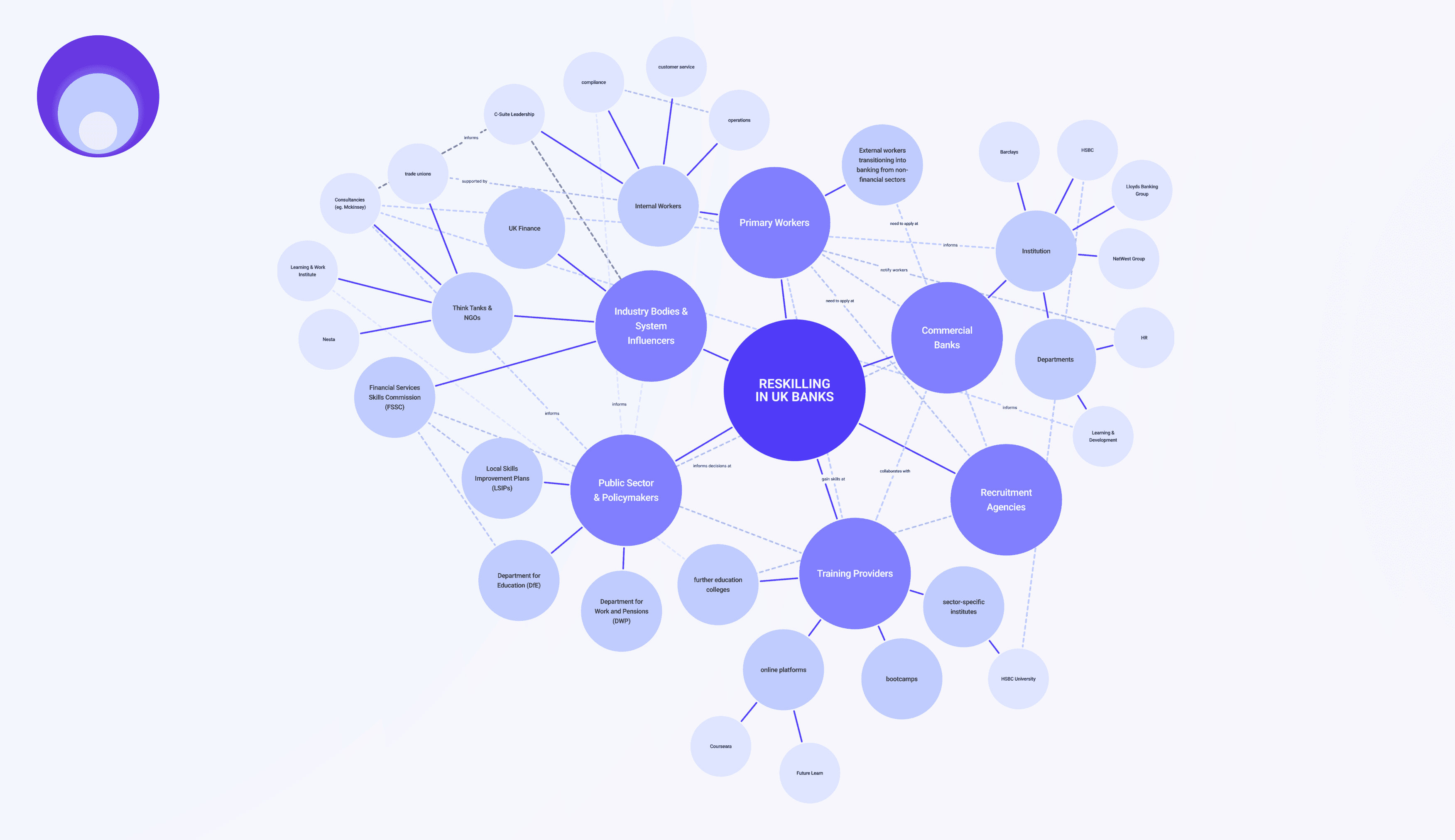
Multi-level analysis, interviews, system mapping, Multi-state personas + journey mapping, Behavioural modelling, Co-creation, Theory of Change, Service blueprinting.
Validation:
Employee Surveys, Prototype simulation workshop and Co-creation workshops with Financial Services Skills Commission (FSSC), indicate model soundness and signals adoption potential.
Key signal:
Unified systems that utilises business objectives, needs and trends to drive internal mobility and reskilling pathways correlates to higher retention and productivity as well as avoiding material redundancy + external recruitment cost per role.
What was delivered:
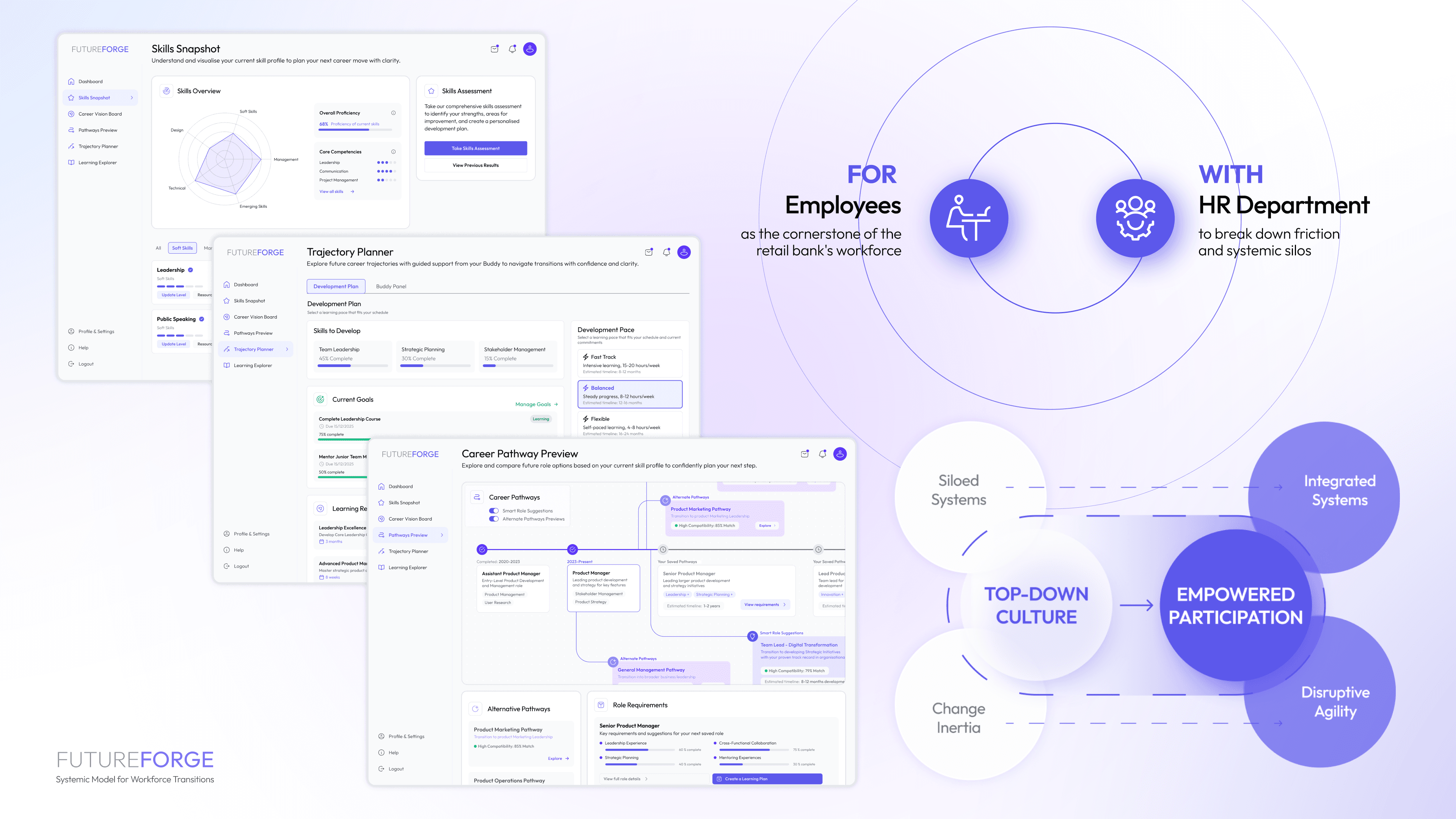
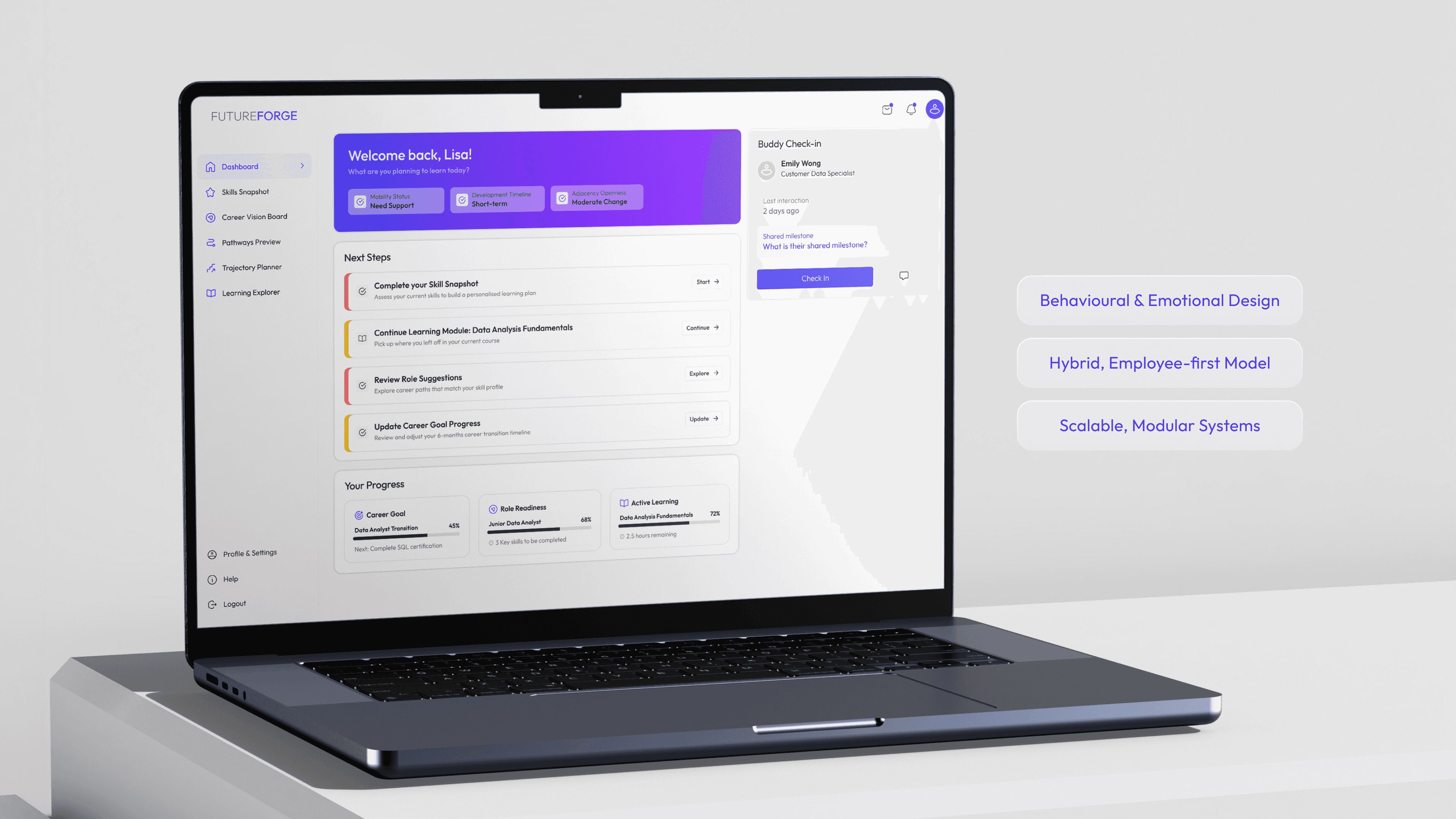
In Futureforge, my team and I designed a transition system concept that makes internal mobility easier to navigate and safer to pursue—while giving HR/SWP better talent visibility—by connecting employee experience, behavioural design, and organisational operating model into a single coherent mechanism.

Why this matters:
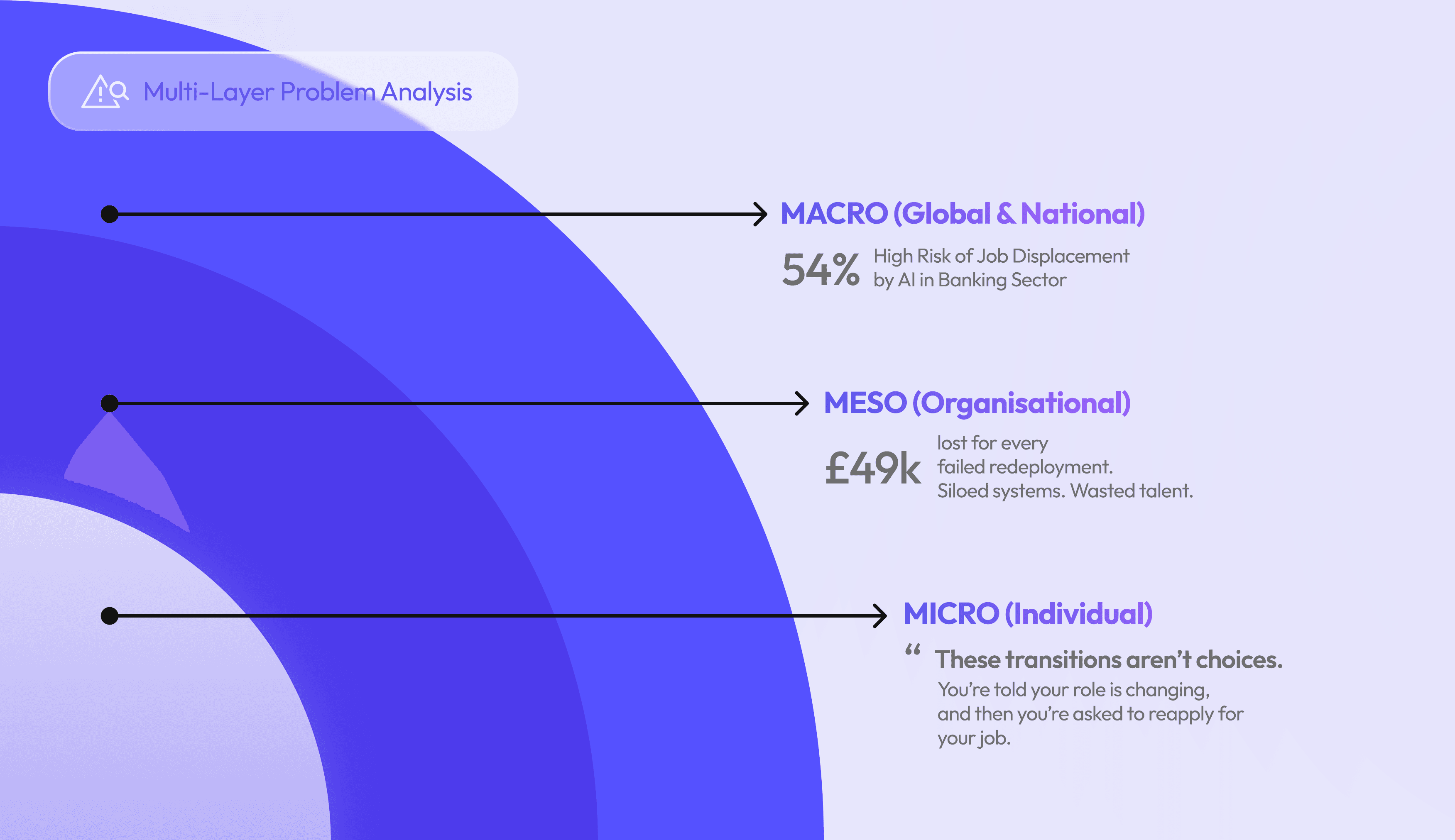
Retail banking is structurally exposed to automation because work is routine-heavy and constrained by legacy infrastructure; yet transition initiatives remain fragmented and tool-led, leaving mid-career staff underserved.
When mobility is designed as a continuous system (not isolated HR programmes), banks can reduce avoidable churn and redeployment costs while preserving institutional knowledge.
FutureForge
Overview
A Strategic Design Model for Internal Workforce Transitions in the Fourth Industrial Revolution
FutureForge is a strategic service model that helps UK retail banks move from reactive redeployment to proactive internal mobility by fixing four systemic failure modes: fragmented infrastructure, permission-led culture, low psychological safety, and ad-hoc workforce strategy.
It reframes workforce transition as a continuous journey (not a one-off event), aligning employee agency with strategic workforce planning through an integrated experience architecture, behavioural scaffolding, and governance touchpoints across HR, L&D, SWP, and line management.
Categories
Service Design
Design Strategy
Date
Jul 28, 2025
Client
Royal College of Art
(Content under Construction, Click here to view full report)
Jump to:
Research and Discovery
Developing a new strategic model
Validation and Co-design
Context:
UK retail banking, mid-career workforce transitions under AI/automation disruption
Methods:
Multi-level analysis, interviews, system mapping, Multi-state personas + journey mapping, Behavioural modelling, Co-creation, Theory of Change, Service blueprinting.
Validation:
Employee Surveys, Prototype simulation workshop and Co-creation workshops with Financial Services Skills Commission (FSSC), indicate model soundness and signals adoption potential.
Key signal:
Unified systems that utilises business objectives, needs and trends to drive internal mobility and reskilling pathways correlates to higher retention and productivity as well as avoiding material redundancy + external recruitment cost per role.
What was delivered:
In Futureforge, my team and I designed a transition system concept that makes internal mobility easier to navigate and safer to pursue—while giving HR/SWP better talent visibility—by connecting employee experience, behavioural design, and organisational operating model into a single coherent mechanism.
Why this matters:
Retail banking is structurally exposed to automation because work is routine-heavy and constrained by legacy infrastructure; yet transition initiatives remain fragmented and tool-led, leaving mid-career staff underserved.
When mobility is designed as a continuous system (not isolated HR programmes), banks can reduce avoidable churn and redeployment costs while preserving institutional knowledge.